
Why Anti-Obesity Drugs Could Become Pharma’s Largest Revenue Segment by 2035
 Facebook
 Twitter
 LinkedIn
 WhatsApp
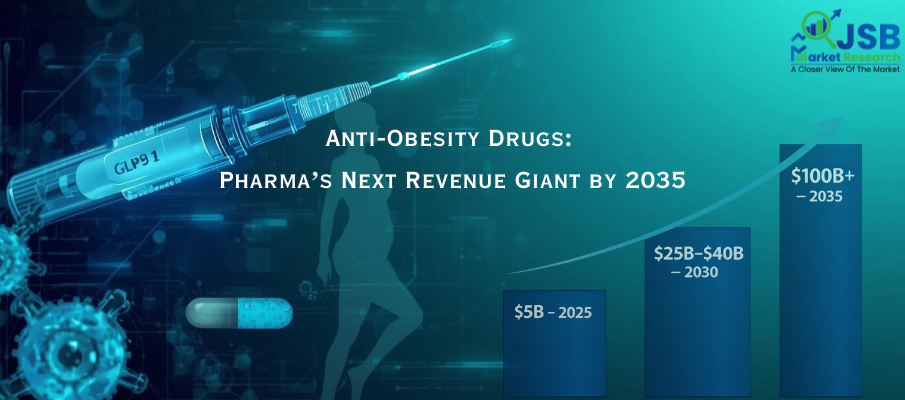
The anti-obesity drugs market is poised for explosive growth, expanding from around $5B in 2025 to potentially over $100B by 2035. Driven by rising global obesity rates, low treatment penetration, and breakthroughs in GLP-1 therapies, this segment is evolving into a high-demand, chronic treatment market. Strong innovation pipelines, increasing adoption, and broad industry impact position anti-obesity drugs as a future dominant revenue driver in the pharmaceutical sector.
The global pharmaceutical industry is on the brink of a major revenue shift—and anti-obesity drugs are at the center of it. Valued at roughly $5 billion in 2025, the market is projected to surge toward $80–$100+ billion by 2035, making it one of the fastest-growing and most lucrative therapeutic segments in modern pharma. Driven by breakthrough GLP-1 therapies, rising global obesity rates, and expanding access models, weight loss drugs are no longer niche treatments—they are becoming chronic, high-revenue therapies with blockbuster potential.
The $5B to $100B Surge: Anti-Obesity Drugs Market Forecast to 2035
The anti-obesity drugs market is projected to grow at a CAGR of 30–40%, driven by strong clinical outcomes and increasing global adoption.
| Year | Market Size | Stage |
|---|---|---|
| 2025 | $5B | Early Growth |
| 2030 | $25–40B | Expansion |
| 2035 | $80–100B+ | Mature Market |
Obesity as a Global Epidemic
- Over 1 billion people globally are obese
- More than 2.5 billion are overweight
- Less than 5% receive drug-based treatment
This treatment gap creates one of the largest untapped opportunities in global healthcare, acting as the primary demand engine behind the rapid expansion of anti-obesity therapeutics.
GLP-1 Innovation Driving Growth
GLP-1 receptor agonists are transforming obesity treatment by delivering clinically significant weight loss and metabolic improvements. These therapies regulate appetite, enhance insulin response, and support long-term weight management.
- 15–25% weight loss outcomes
- Next-gen dual and triple agonists
- Oral drug development underway
The innovation pipeline suggests that current therapies are only the beginning of a broader shift toward highly effective, long-term metabolic treatments.
Expanding Access and Commercial Models
Access to anti-obesity drugs is improving through multiple channels, enabling broader adoption and recurring revenue streams.
- Insurance Coverage: Increasing reimbursement and employer-sponsored plans
- Telehealth Platforms: Simplified diagnosis and prescription access
- Direct-to-Consumer Models: Subscription-based treatment programs
Competitive Landscape
| Segment | Focus | Strength |
|---|---|---|
| Big Pharma | Approved drugs | Scale |
| Biotech | Innovation | Agility |
Large pharmaceutical companies currently dominate commercialization, while emerging biotech firms continue to drive innovation and pipeline expansion.
Top Companies to Watch
- Novo Nordisk
- Eli Lilly
- Pfizer
- Amgen
- Roche
- AstraZeneca
- Regeneron
- Structure Therapeutics
- Viking Therapeutics
- Altimmune
Regional Growth Outlook
North America leads in revenue due to strong adoption and pricing power, while Asia-Pacific is the fastest-growing region driven by large patient populations and improving healthcare access.
Emerging markets, particularly in Asia, are expected to play a critical role in long-term volume expansion as affordability improves and awareness increases.
Beyond Pharma: Industry Impact
- Food & Beverage transformation toward healthier options
- Shift in fitness and wellness industry dynamics
- Insurance cost optimization through reduced chronic disease burden
- Pressure on traditional nutraceutical markets
Investor Takeaway
Anti-obesity drugs combine large-scale demand, recurring revenue potential, and strong innovation pipelines. These factors position them as a future dominant pharmaceutical segment with the potential to redefine industry revenue structures by 2035.
Global High Protein Fishmeal Market Research Report 2026
Explore Growth Trends in the High Protein Fishmeal Market
Access Detailed Market Forecasts and Competitive Analysis