Bengaluru Faces Water Crisis: Residents Consider Leaving the City
 Facebook
 Twitter
 LinkedIn
 WhatsApp
Summary: The water crisis hits Bengaluru severely amid the low rainfall this year. There’s a high demand for water management strategies.
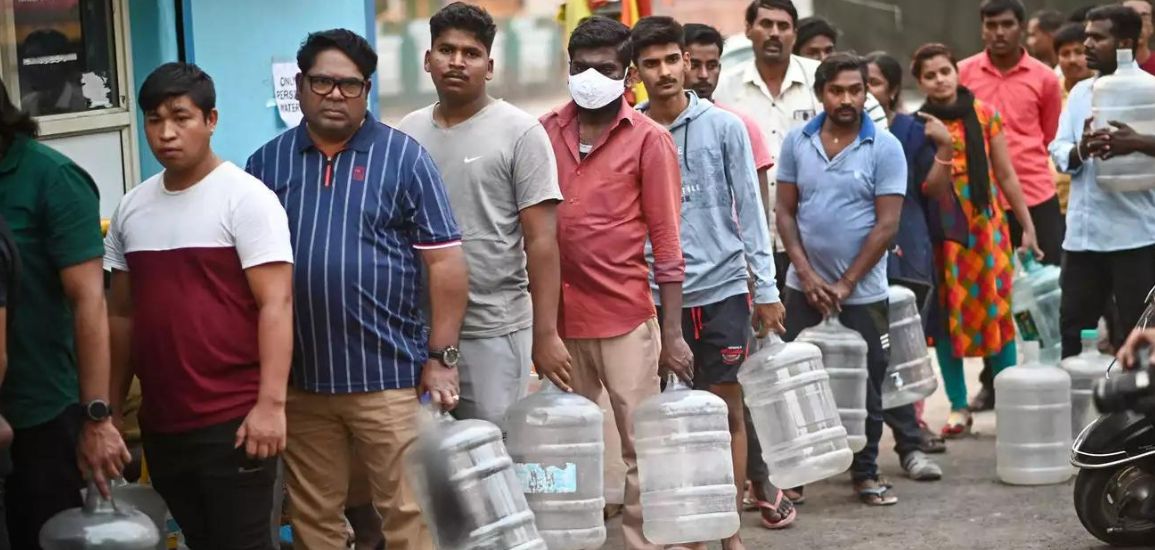
The city of Bengaluru, facing a water crisis, has been in the international headlines for the last few days. The residents of Bengaluru are considering leaving the city amidst the severe water scarcity.
A resident named Bhavani Mani Muthuvel and her family of nine members have only 20 liters of water (5 gallons) for everything, from cooking to bathing, cleaning, and other household chores. She said, "From taking showers to using toilets and washing clothes, we are taking turns to do everything.” The residents were dependent on pipe water from underground, but now it has completely dried up. According to Bhavani Muthuvel, this is the worst water crisis she has faced in 40 years.
Bengaluru is not the only city facing a shortage of water; the state of Karnataka and the neighboring areas of Maharashtra and Telangana are also facing a water crisis. On Monday, Karnatak CM Siddaramaiah said that Bengaluru is facing a shortage of 500 million liters of water every day. He said proper arrangements are being made to provide Bengaluru with additional supplies.
The reason states and cities are facing water scarcity is due to the less-than-normal waterfall last year. Karnataka received 18% low rainfall, that’s below the normal and lowest ever since 2015. Most of Karnataka and other countries fill up their reservoirs and recharge their aquifers with the water that's collected during the monsoon. The city and state governments are trying to control the situation by offering emergency measures like lowering the cost of water and providing water tankers.
Bengaluru may face a more severe crisis during the summers, when the heat will be at its peak. According to a Bengaluru-based hydrologist, “Bengaluru is one of the fastest-growing cities in the world, and the infrastructure for freshwater supply is not able to keep up with a growing population. Supply is not able to keep up with a growing population.”