
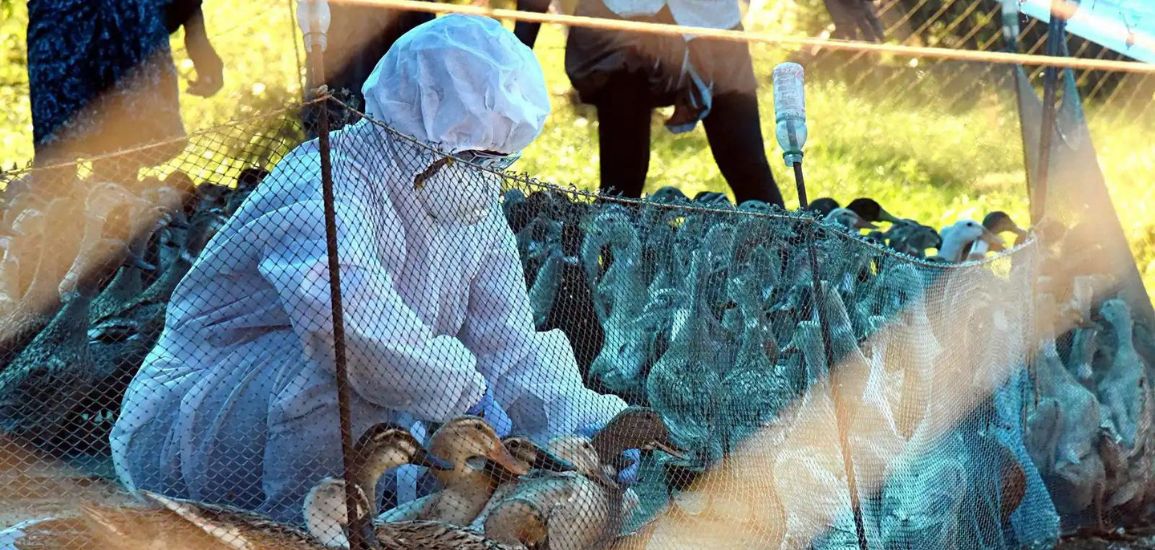
Bird Flu Outbreak in Kerala: The State on High Alert
 Facebook
 Twitter
 LinkedIn
 WhatsApp
Summary: The Kerala government confirmed the existence of H5N1 bird flu in ducks in Alappuzha.
Ducks in Ward 1 of Edathua Grama Panchayat and Ward 3 of Cheruthana Grama Panchayat were confirmed to have bird flu after tests were performed on affected duck samples sent to a Bhopal laboratory.
Following reports of a bird flu outbreak impacting two panchayats in Alappuzha, State Health Minister Veena George urged the health department's director to take immediate action under the Kerala Public Health Act of 2023.
Panchayat-level committees have been tasked with analyzing the situation and carrying out the necessary actions. This decision applies to all panchayats in Alappuzha and the surrounding areas under surveillance, with instructions to reactivate 'One Health' committees in the panchayats.
The health minister highlighted that, while bird flu has not yet infected humans in the state, it is critical to take steps to prevent its spread, according to The Times of India.
On Friday, the state's Animal Husbandry Department (AHD) undertook bird culling operations in the affected areas of Kuttanad and Alappuzha.
According to the reports, about 21,000 ducks would be slaughtered in Edathua and Cheruthana, the epicenters of the bird flu outbreak. Additionally, all domesticated poultry within a one-kilometer radius of the outbreak zones will be slaughtered.
To prevent the spread of bird flu from Alappuzha, security has been increased at 12 border checkpoints in neighboring Tamil Nadu. These locations, which are located in Anaikatti, Walayar, and Velandavazham, are staffed by a veterinarian and other staff. Cars carrying poultry items are being halted and turned back, while disinfection steps are being implemented for cars coming from Kerala.
According to the report, 432 samples from poultry farms were tested and showed no symptoms of bird flu.
What is Bird Flu H5N1?
H5N1, often known as bird flu, is a highly pathogenic strain of avian influenza A that causes severe sickness in birds and may also spread to humans and other animals. Although it mostly affects birds, it can also be deadly to humans. The virus was discovered in China in 1996, with many people dying during outbreaks, including one in Hong Kong in 1997.
Bird flu is mostly spread by contact with contaminated animal secretions, including saliva, droplets of breath, or feces. It can infect the upper respiratory tract, lungs, and other body parts, potentially causing serious sickness.
In humans, the symptoms of H5N1 infection may differ greatly. They can range from no symptoms to mild sickness, such as conjunctivitis (redness of the eye) or mild flu-like upper respiratory symptoms, to severe cases that require hospitalization.
Common symptoms include fever, cough, sore throat, runny nose, muscle pain, headaches, fatigue, and breathing problems. Less common symptoms include diarrhea, nausea, vomiting, and seizures. Fever may not always be present.