BYD Mulls Local Assembly in India as Hundreds of EV Orders Back Up
 Facebook
 Twitter
 LinkedIn
 WhatsApp
Summary: The Chinese EV manufacturer sees huge demand and is looking into ways to increase supply, with dealers facing large order backlogs.
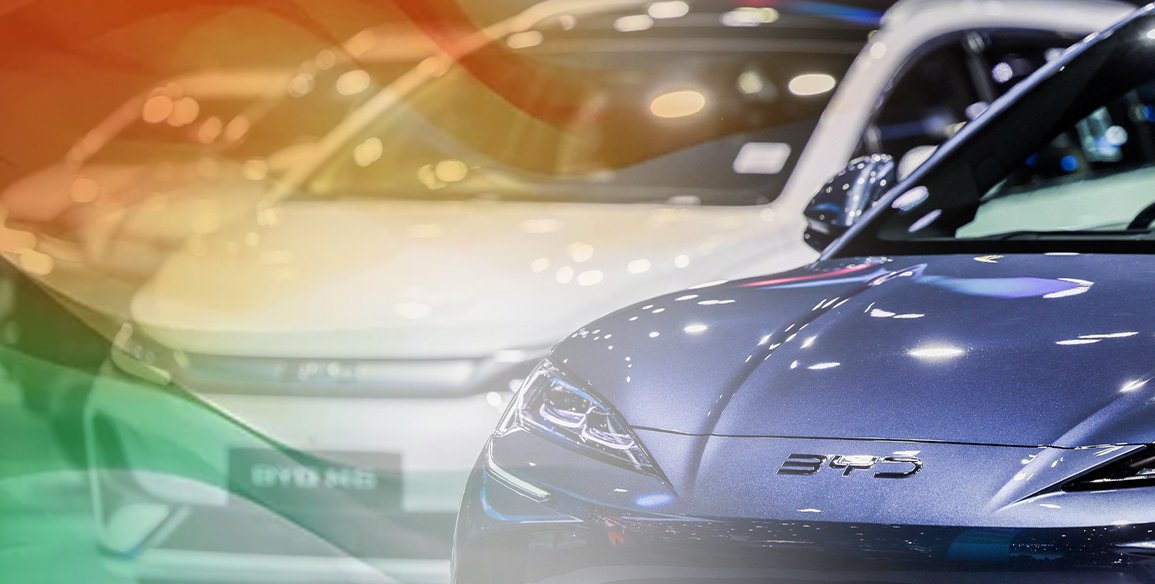
With dealers apparently sitting on hundreds of unfulfilled orders, Chinese electric vehicle company BYD Co. is considering plans to increase its presence in India as demand for its vehicles exceeds its present supply.
India’s fast-growing electric vehicle (EV) market has become an increasingly important battleground for global EV makers, and BYD’s surge in interest highlights just how quickly consumer appetite is shifting. The company’s sales in India jumped sharply last year to about 5,500 units, up roughly 88 per cent from the previous year, despite heavy import duties that cap how many fully built units it can bring in.
To ease that bottleneck, sources familiar with BYD’s strategy say the automaker is exploring local assembly options, including the possibility of putting together vehicles from semi-knocked-down (SKD) kits on Indian soil. This step — seen as more achievable than a full manufacturing plant — could help BYD sidestep strict import limits and cut tariffs significantly, making cars more affordable and delivery times shorter.
Under current rules, fully built cars face import duties of up to 110 per cent, and each model is capped at a quota of 2,500 units a year. Shifting to locally assembled SKD units could reduce the tariff burden to around 30 per cent, a more manageable cost structure that might enable the company to clear its growing order backlog.
BYD has already garnered strong interest in India with models such as the Atto 3 compact e-SUV, eMAX 7 multipurpose vehicle, Sealion 7 SUV and the Seal sedan, many of which continue to attract bookings even after inventory sold out in the recent December quarter. Several senior BYD executives have visited India as part of discussions with local regulators and partners, though formal plans are still in the early stages and have not been publicly announced.
The move comes at a time when foreign EV makers are increasingly looking to adapt to India’s unique regulatory environment. Tesla, for example, has struggled with similar quotas and is pursuing different pricing and localisation strategies to grow its foothold. BYD’s approach suggests it wants to cement a stronger operational base here, even if a full-scale factory proposal was previously turned down by Indian authorities.
Investors and industry watchers say BYD’s India push reflects broader trends in global EV expansion, where companies must balance demand, tariffs and localisation to succeed in markets with complex rules and price-sensitive buyers. If BYD proceeds with local assembly, it could be a significant step in making electric vehicles more widespread and accessible across India’s burgeoning EV ecosystem.
For now, the key questions revolve around regulatory approvals, tariff structures and the scale of local operations BYD might commit to — variables that will shape both how quickly it can fulfil the backlog of orders and how competitively it can price its EVs in one of Asia’s most promising automotive markets.