The Future of Electric Cars in India Might Depend on High-Speed Trains
 Facebook
 Twitter
 LinkedIn
 WhatsApp
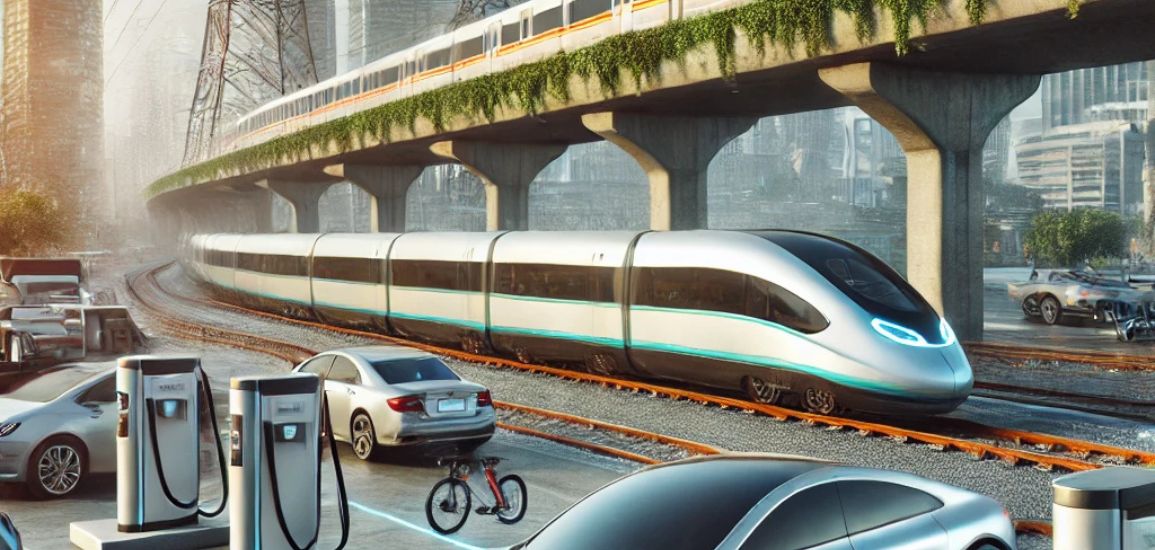
India is advancing the adoption of electric vehicles (EVs), but high-speed rail, instead of just more charging points or cheaper EVs may accelerate this transition. As Chinese success is possible, India might overcome range anxiety, one of the greatest barriers to the popularity of EVs, using an expanded railway network.
The China Example
A recent study that analyzed 328 Chinese cities between 2010 and 2023 revealed a high correlation between the growth of high-speed rail and EV penetration. Sales volume expanded by 91.39%, and the average EV market share expanded by 1.22 percentage points in cities newly added to China's vast rail network. So, a well-planned high-speed rail system enables EVs to travel great distances while reducing dependency on roads and charging stations.
There was only one high-speed rail line in China in 2008; today, the network serves 96% of cities with a population of 500,000 or more. China has more than 22 million plug-in cars on its roads and is the global leader in electric mobility due to this rapid growth and a boom in the sale of EVs.
India's EV Challenge
India's EV market remains nascent, with fewer than 3% of total automobile sales last year being fully electric vehicles. The lack of public charging stations—India has 25,000, whereas China has 3 million—is the largest obstacle. Long-distance highway travel is still a worry, which discourages many potential EV buyers, even while charging at home is effective for daily trips.
At the same time, India's transportation policy has focused on roads instead of rail. For many years, the country's rail system—which was primarily left over from British colonial rule, has been neglected. With China's high-speed rail reaching 220 mph and express trains traveling at an average speed of 51 km/h (32 mph), travel between major cities is now quicker and more convenient.
The Need for High-Speed Rail
India's first bullet train from Mumbai to Ahmedabad is being built with Japanese help and is likely to start operations in 2026. The government has also committed to three more high-speed rail corridors in other parts of the country. However, the pace of expansion pales in comparison to China's high-speed rail investment of $100 billion.
High-speed rail growth will significantly increase the EV market by providing a reliable mode of transportation over longer distances, reducing the need for extensive charging networks, and enticing more people to select electric vehicles. It will be difficult to reach China's 45% EV penetration rate without this infrastructure.
The Road Ahead
While subsidies, policies of the government, and competition from international players such as Tesla and BYD will provide a fillip to EV adoption, it will not be sufficient. India must focus on developing high-speed rails to promote its EV sector.
Even if Prime Minister Narendra Modi’s administration cannot complete multiple high-speed rail projects during its tenure, getting them started could lay the foundation for an EV-friendly future. If India truly wants to catch up with China in the EV race, fast trains may be the missing piece of the puzzle.