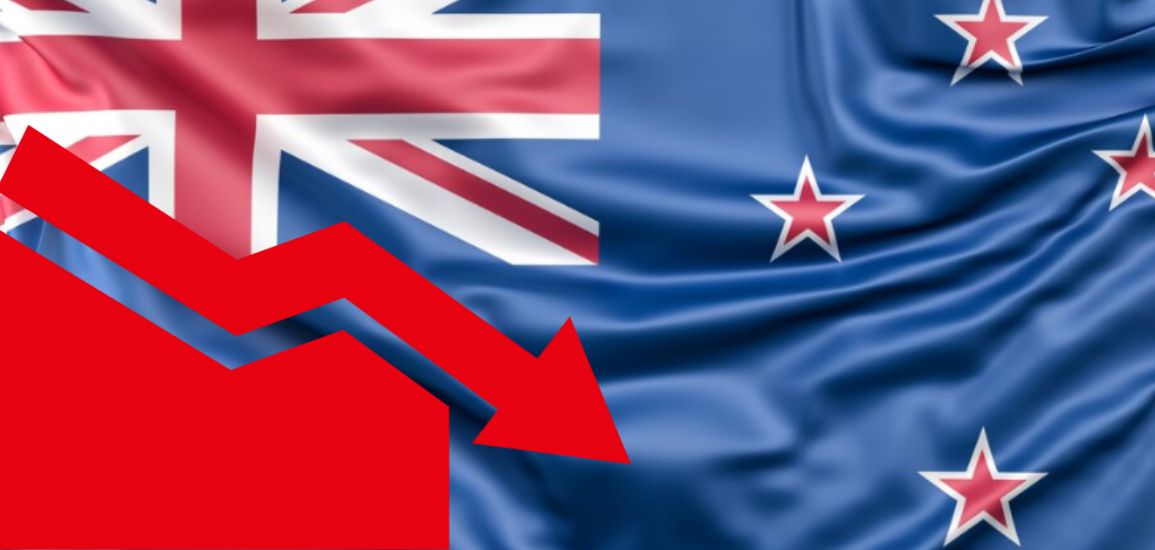
New Zealand has gone into recession, and rate cuts are to happen soon.
 Facebook
 Twitter
 LinkedIn
 WhatsApp
Summary: New Zealand in recession - economists predict larger cuts to Reserve Bank interest rates.
New Zealand's economy slipped into a recession in the third quarter, with activity dropping much more than expected and output from the prior quarter being chopped in half. This disappointing news underscores the need for sharper interest rate cuts.
The surprising news dropped the local dollar to a new two-year low of $0.5614 after it had already dipped 2.2% following a surprisingly hawkish easing from the U.S. Federal Reserve.
Markets increased their bets on the Reserve Bank of New Zealand making additional cuts after reducing rates by 125 basis points down to 4.25%.
Currently, swaps suggest a 70% chance of a 50-basis-point cut coming in February, with expectations that rates could drop to 3.0% by the close of 2025.
According to Thursday's report, GDP fell 1.0% in the September quarter compared to the previous quarter, much exceeding market expectations of a 0.2% decline.
The June quarter was corrected to indicate a 1.1% decrease, and two consecutive quarters of drop are the technical definition of a recession. Setting aside the epidemic, this was the most severe two-quarter fall since 1991.
With deficits for the following five years, the administration was ready to give up on the prospect of a return to budget surpluses.
On Thursday, Nicola Willis, the finance minister, blamed the central bank for contributing to the economic downturn.
The nationwide decline was most noticeable in manufacturing, utilities, and construction. Spending by households and the government fell throughout the quarter, and exports and investment also suffered.
Output fell 1.5% in the year ending in September, which was the biggest decline since the pandemic and significantly more than the 0.4% decline predicted.
The GDP per person fell by an even greater 2.1% for the year, despite the South Pacific island nation's population growing by 1.2% to 5.35 million in the year ending in September.
The statistics bureau's significant modifications, which increased GDP growth by about 2 percentage points during the two fiscal years ending in March 2024, muddled the picture.
As a result, this year's starting point was stronger than anticipated. Additionally, it eliminated a recession and an extended period of slow development that had played a role in the demise of the previous Labour administration.
Given that the RBNZ has lowered borrowing prices by a whole percentage point this quarter, analysts were still holding out hope that the economy was improving.
While confidence remained close to all-time highs, an ANZ survey of businesses released on Thursday revealed a further improvement in December activity.