Putin Holds Late-Night Talks with US Envoys on Ukraine Peace Push
 Facebook
 Twitter
 LinkedIn
 WhatsApp
Summary: Russian president and Trump’s envoys meet in Moscow, but territorial impasse remains a key issue.
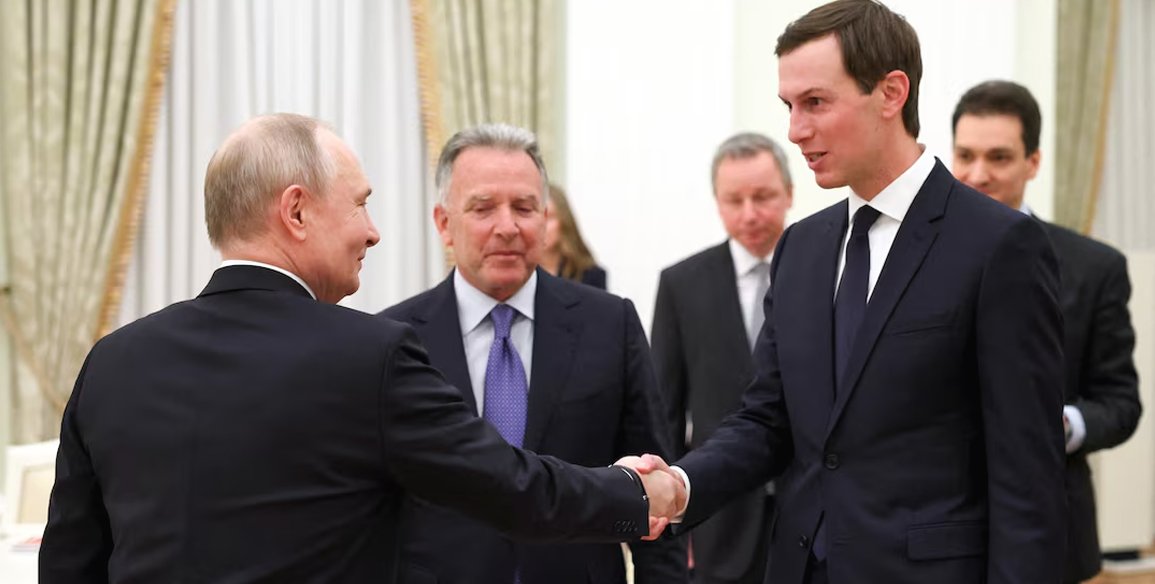
Russian President Vladimir Putin held late-night talks with three top envoys from the United States on Thursday in an intensifying diplomatic effort to find an end to the nearly four-year war in Ukraine.
Putin met with U.S. representatives, including special envoy Steve Witkoff, presidential adviser Jared Kushner and newly appointed senior adviser Josh Gruenbaum at the Kremlin, beginning discussions shortly before midnight and stretching into the early hours. The talks, framed as part of Washington’s renewed push for a peace settlement, were described by a Kremlin aide as substantive and constructive.
The meeting came on the heels of U.S. President Donald Trump’s comments earlier this week that a deal to end the conflict was “reasonably close,” though key issues remain unresolved. Trump’s envoys had arrived in Moscow after meetings with Ukrainian officials in Switzerland and ahead of a planned trilateral session with delegations from Ukraine and Russia in Abu Dhabi.
For his part, Putin reiterated that Russia remains open to diplomatic engagement but insisted that territorial issues must be addressed for a lasting settlement. One sticking point is Moscow’s demand that Ukraine relinquish control over parts of the Donetsk region that Kyiv still holds, as well as Russia’s insistence that Kyiv abandon aspirations to join NATO — positions Ukraine has firmly rejected.
Kremlin aide Yuri Ushakov said after the meeting that the discussions helped outline next steps, including security talks scheduled in Abu Dhabi. Russia will also send key figures such as Admiral Igor Kostyukov to those talks, with economic and diplomatic follow-ups planned. But Ushakov stressed that without a resolution on territorial control along the lines agreed in prior summits, a long-term peace deal remains unlikely.
The talks unfolded against the backdrop of ongoing fighting and civilian hardship, especially during winter, as Russian strikes have targeted Ukraine’s energy infrastructure. That dynamic has heightened urgency for negotiators but also underscored how far apart the parties still are.
Ukraine’s President Volodymyr Zelenskyy has meanwhile endorsed the broader negotiation process, saying that teams from Russia, Ukraine and the United States will meet in Abu Dhabi later this week to push trilateral dialogue forward. However, he acknowledged that territorial issues and security guarantees remain key obstacles.
While no breakthrough was reported from the Moscow session, both sides signalled a willingness to continue dialogue, even as military operations continue in the field. Observers say that how negotiators bridge the gap over territory and security guarantees — including Ukraine’s future relationship with NATO — will ultimately determine whether these diplomatic efforts can succeed.