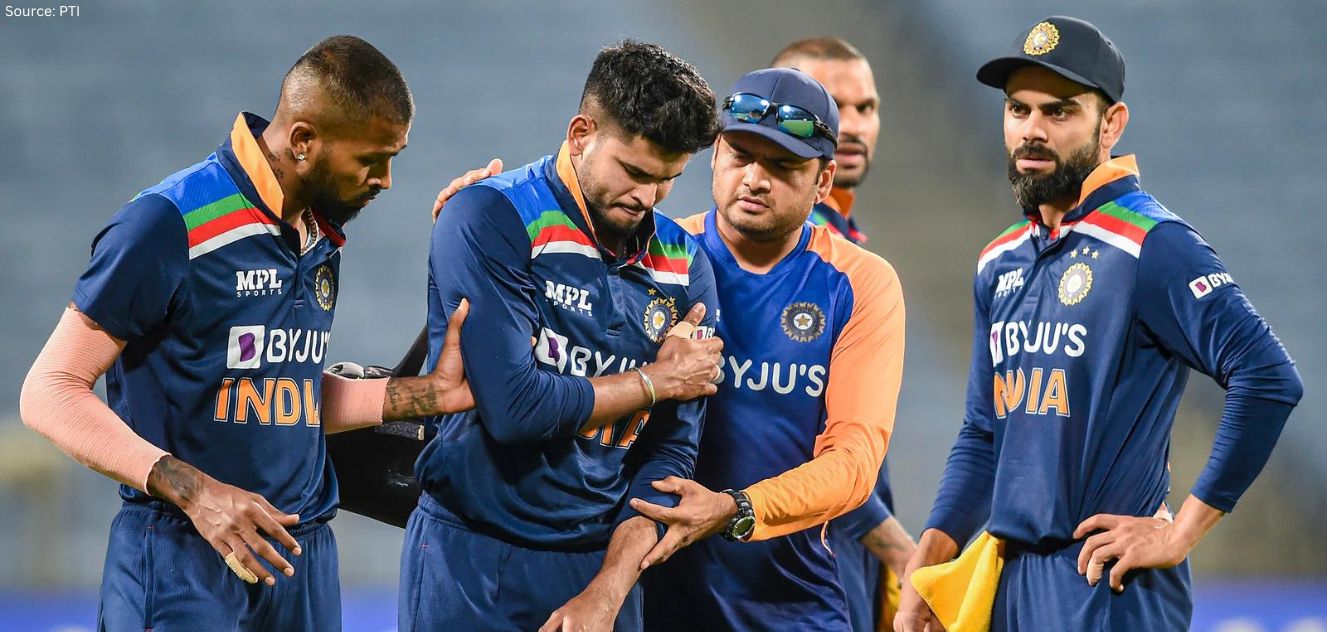
The Pain Was Unbearable’: Shreyas Iyer Provides Chilling Description Of Injury Before His Comeback For The Asia Cup
 Facebook
 Twitter
 LinkedIn
 WhatsApp
Summary: Shreyas Iyer revealed that he had a slipped disc condition, causing nerve compression and radiating pain down to his smallest toe.
With just under two months left until the impending ODI World Cup, Team India’s spirits were lifted significantly with the announcement of Shreyas Iyer’s fitness clearance for his return to the national team. The accomplished middle-order batsman has secured a spot in India’s lineup for the Asia Cup, and chief selector Ajit Agarkar alluded to the likelihood of this unit forming the essential core for the forthcoming World Cup.
After a considerable absence, Shreyas is returning to the national team, having suffered an injury during the Border Gavaskar Trophy in February and March earlier this year. His absence extended to missing the IPL and the WTC final against Australia. Opening up about his injury for the first time since his inclusion in the Asia Cup squad, Iyer acknowledged his excitement at returning and expressed gratitude towards his teammates for their unwavering support.
He went on to provide more details about the injury that sidelined him since March. Iyer explained that he had experienced a slipped disc condition, which resulted in nerve compression, causing pain that extended down to his smallest toe.
“I had been grappling with this problem for some time, attempting injections and exploring different avenues to continue playing matches consistently. However, it reached a juncture where I recognized the need for surgery. Physiotherapists and specialists advised me that undergoing the surgical procedure was crucial,” explained Iyer in a conversation with BCCI.tv.
Following the surgery, Iyer spent three weeks in London under the observation of doctors, after which he was transferred to the National Cricket Academy (NCA). He shared that the pain persisted for three months after the surgery before gradually diminishing.