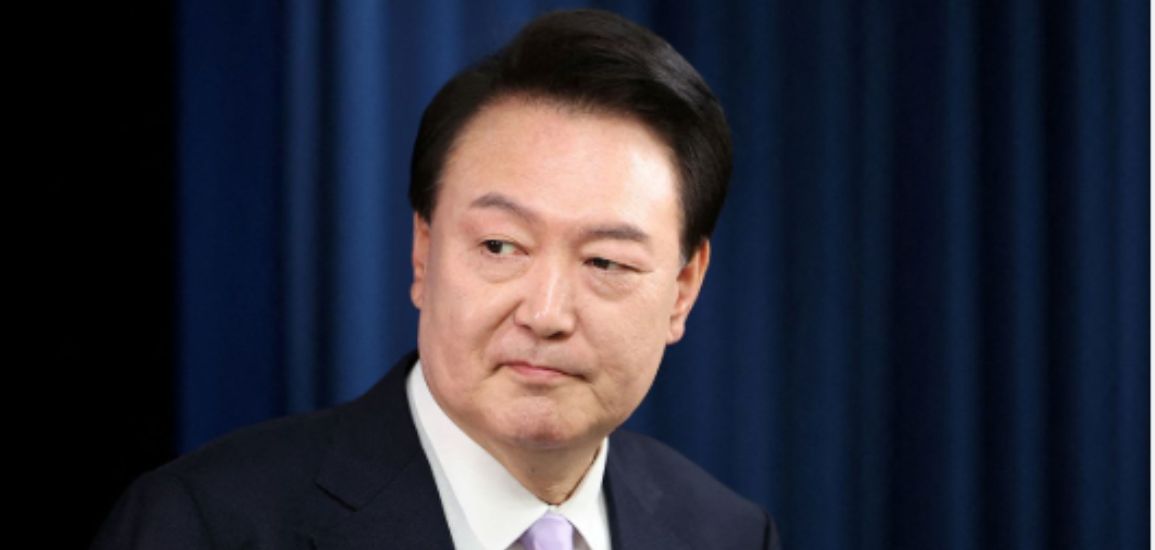
South Korea Martial Law Crisis: President Yoon Suk Yeol asked to resign from his position.
 Facebook
 Twitter
 LinkedIn
 WhatsApp
Summary: The South Korean President imposed martial law but soon withdrew it after the lawmakers and citizens opposed the decision.
After declaring martial law in an unexpected, late-night speech on Tuesday, President Yoon is now under mounting pressure to resign. He said that the drastic shift was required to protect the nation's liberal democracy from "anti-state forces" and "threats posed by North Korea."
The military acted quickly after Yoon's late-night declaration. Legislators and staff were essentially shut out of the Seoul National Assembly as soldiers surrounded it.
Stunned parliamentary staff members allegedly used fire extinguishers to try to drive the military back as helicopters landed on the roof and troops entered the building.
Gen. Park An-soo, the martial law commander, issued a six-point decree that placed the media under military control and prohibited political activity, strikes, and protests.
Yoon quickly changed his mind, stating that after a cabinet discussion, the order would be revoked and the troops would return to their barracks.
The unexpected proclamation, marking the first instance of martial law in South Korea in more than 40 years, raised concerns both at home and abroad as military forces encircled Parliament.
For six tense hours, the nation's dynamic democracy hung in the balance as soldiers encircled the National Assembly, lawmakers struggled to hold an emergency session, and citizens flooded the streets to call for a reversal.
By Wednesday morning, South Korea's parliament had nullified the declaration, compelling Yoon to revoke martial law in what became one of the most agitated and conflicting moments in the country’s contemporary history.
The tense scenario played out amidst a rising political impasse reportedly linked to the national budget, with Yoon's government enduring escalating backlash for its management of internal affairs.
What is a martial law?
When martial law is declared in a nation, it signifies a temporary handover of authority from the civilian government to military forces. Soon after the declaration, Army Chief General Park An-su enacted a decree that put the brakes on political activities, strikes, and gatherings, while also placing the media under martial law scrutiny.
The South Korean constitution does permit the president to declare martial law in “wartime, warlike situations, or similar national emergencies” when military action is deemed necessary to uphold peace. Nevertheless, it raises eyebrows as to whether South Korea is genuinely under such dire circumstances at this time.
If Yoon doesn't submit his resignation right away, the main opposition Democratic party has threatened to try to impeach him. Yoon's staff members have also pledged to quit "en masse."
The "irrational and anti-democratic measure" has also prompted the nation's main labor union group to call for an "indefinite general strike" until he steps down.